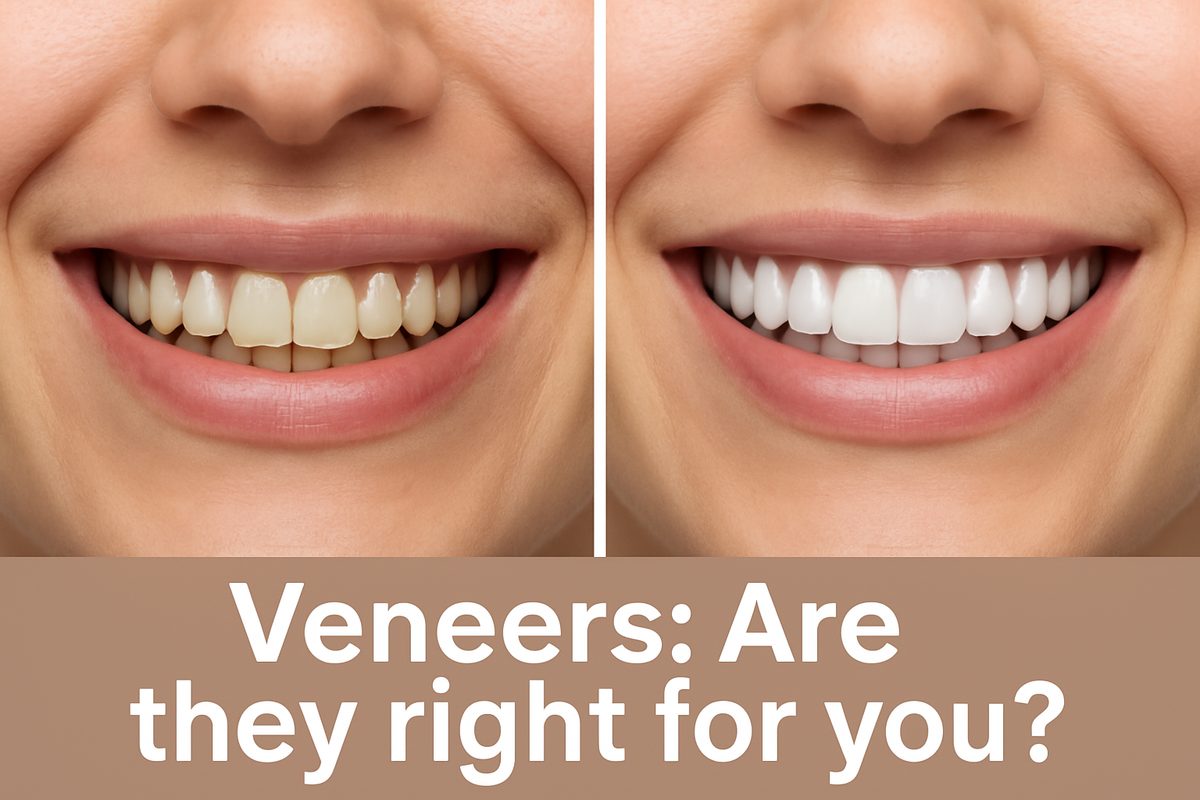
This short guide explains what veneers are, why people choose them, and what to expect if you’re considering a cosmetic smile update. You may see searches for “venures teeth” — that’s a common misspelling. The correct term is veneers (often called “veneers for teeth”). This page gives quick, practical steps so you know your options.
What Are Veneers?
Veneers are thin shells placed on the front of teeth to change their look. They are bonded to the tooth surface and can change a tooth’s color, shape, size, and length. Common materials include porcelain and composite resin. Porcelain looks most like natural enamel and resists stains, while composite is shaped directly on the tooth and can be done faster.
Common Reasons People Choose Veneers
People pick veneers for many cosmetic and functional reasons:
- Hide stubborn stains that don’t respond to whitening
- Fix chips, cracks, or unusually shaped teeth
- Close small gaps between teeth
- Cover mildly worn or short teeth
- Straighten a slightly crooked smile without braces
Veneers are often a better choice than whitening when stains are deep or intrinsic. They can also be more durable and esthetic than simple bonding for larger fixes.
Types Of Veneers
Porcelain Veneers
Porcelain veneers are made in a dental lab and then bonded to your teeth. Pros: very natural appearance, strong, and stain-resistant. Cons: usually more costly and requires at least two visits because the veneers are custom-made.
Composite Veneers
Composite veneers are built directly on the tooth using resin. Pros: less expensive, can often be done in one visit, and easier to repair. Cons: shorter lifespan, more likely to stain, and may not match the natural translucency of enamel as well as porcelain.
What To Expect During Treatment
Consultation & Planning
Your dentist will discuss goals, take photos, and may use digital smile design to show likely results. Expect a tooth exam and x-rays or scans to make sure veneers are right for you.
Preparation & Placement
Most porcelain veneers require a small amount of enamel removal to make room. The dentist will take impressions or use an intraoral scan. You may get temporary veneers while the lab makes the final ones. At the final visit the veneers are checked for fit and color, then bonded with dental cement.
Typical Timeline
For porcelain veneers, plan on 2–4 weeks from consult to final placement. Composite veneers can often be completed the same day.
Care, Longevity, And Cost Considerations
Care is simple but important:
- Brush twice daily and floss daily
- Avoid biting very hard objects (ice, pens, etc.)
- Wear a night guard if you grind your teeth
- See your dentist regularly for checkups and cleanings
Porcelain veneers last longer than composite—often 10–15 years or more with good care. Composite veneers typically last 5–7 years. Cost factors include the number of veneers, material choice, and lab work. Discuss options with your dentist to match budget and goals.
Risks, Limitations, And Alternatives
Veneers are not reversible because some enamel is removed. Possible issues include temporary sensitivity, chips, or the need for future replacement. Alternatives may be:
- Teeth whitening for surface stains
- Dental bonding for small chips or gaps
- Crowns when a tooth needs more coverage or strength
- Orthodontics for major alignment problems
Choosing A Provider & What Technology Helps
Look for a dentist with experience in cosmetic cases, clear before-and-after photos, and a detailed treatment plan. Ask about digital tools that improve predictability, such as intraoral scanners, digital smile design, and high-definition intraoral cameras. These tools help you see likely results and reduce surprises.
For example, South County Complete Dental Care and Dr. James Fetsch use digital scanners, intraoral cameras, and digital smile design to plan veneers and other esthetic treatments. Their use of technology helps create consistent, predictable results while keeping patient comfort in mind.
Quick FAQ / Final Takeaway
Do veneers hurt? Most patients have little pain; you may feel sensitivity after preparation that fades.
How long do veneers last? Porcelain: often 10–15+ years. Composite: around 5–7 years with normal wear.
Can veneers be whitened? No. Veneers do not respond to whitening. Choose the final shade with your dentist before placement.
Final takeaway: Veneers are a powerful cosmetic option for improving the look of your teeth when done for the right reasons and by an experienced team. If you want a personalized plan, schedule a consultation to review your goals, material options, and a realistic timeline.